
Triumph
and
Grace
The Crowd
Gustave Le Bon
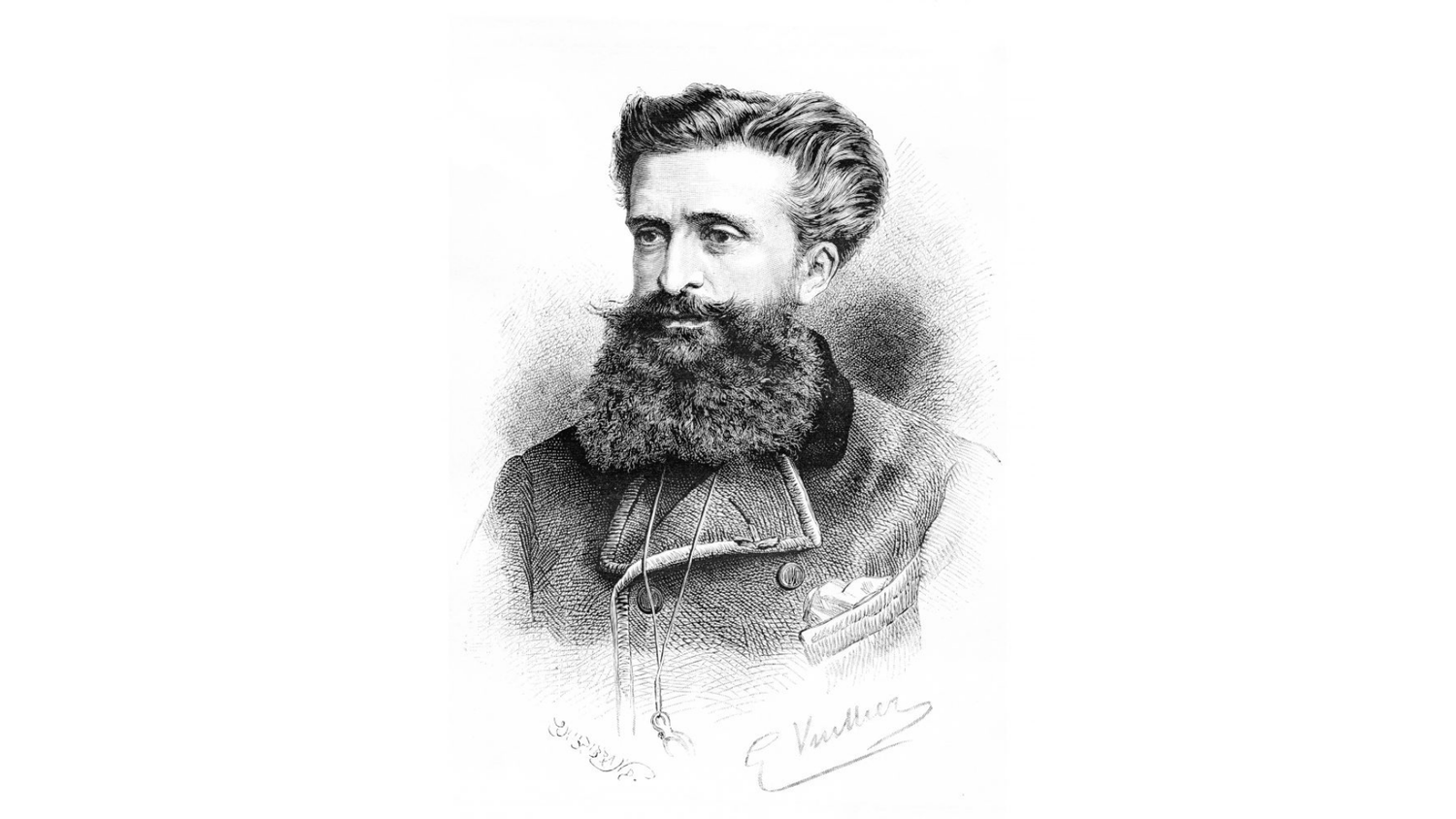
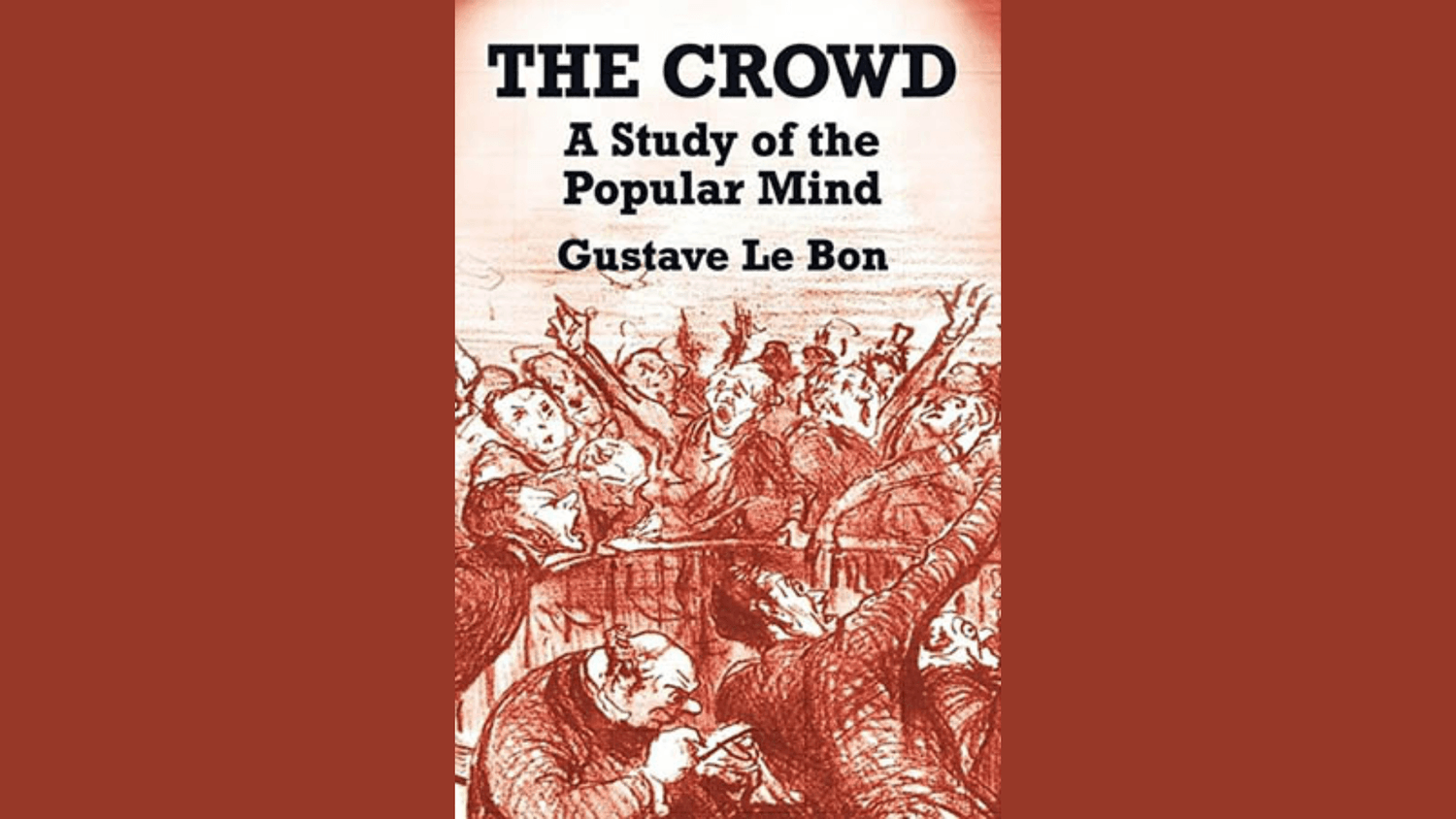
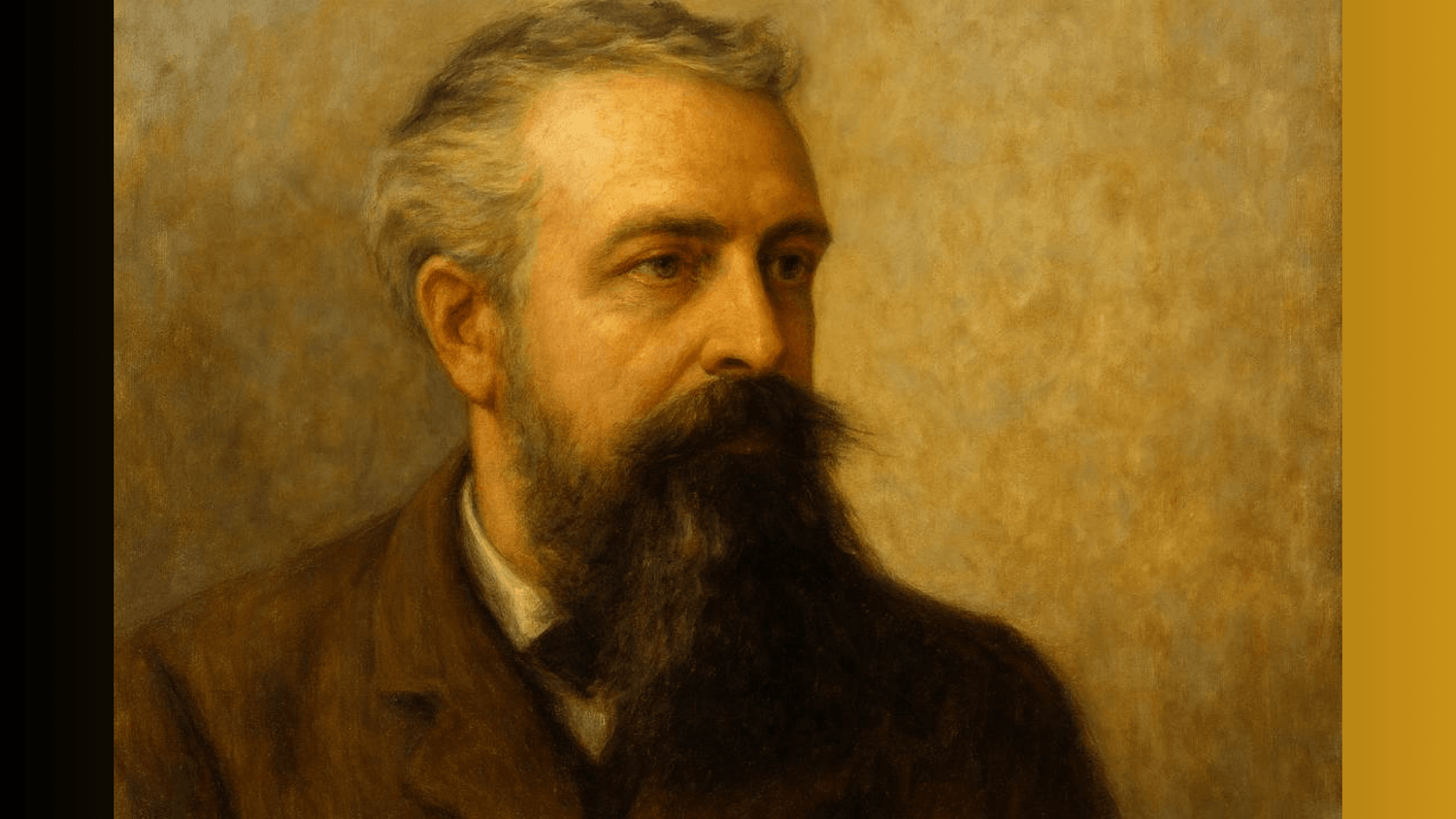
French doctor, polymath, and social psychologist Gustave Le Bon [1841-1931] is best known for his 1895 work The Crowd: A Study of the Popular Mind.
With the backdrop of revolutions, riots, and mob violence in France, he strove to understand why a group of otherwise reasonable people can turn into a mob quickly or why smart individuals can make a collectively terrible decision.
In essence, Le Bon sought to figure out what happens to a person's mind the moment he becomes part of a crowd.
Today, his work remains influential in sociology, politics, and psychology, especially in understanding crowd behavior and mass psychology.
What Did He Discover?
Le Bon argued that when individuals gather into a crowd, physical or virtual, they are no longer a group of individuals. They merge into a collective mind distinct from any of their individual minds.
This crowd mind is governed by emotion, instinct, and suggestion rather than reason, and it can drive people toward acts [heroic or barbarous] that none of them would undertake alone.
He claimed that great civilization shifts in history are not caused by wars or political events, but rather by slower, deeper shifts in what people believe, the underlying changes in ideas.
This new force is the opinion of the masses, the power of the crowds. And those crowds are a destructive force, not a constructive one.
A crowd, for Le Bon, is not just people in physical proximity, but rather a group united by a shared idea, belief, or sentiment. That unifying idea is adopted through contagion and suggestion, not through reasoned evaluation of evidence.
What Happens to the Individual in a Crowd
When someone becomes part of a crowd, several things happen at once:
Loss of conscious personality: the individual stops acting from personal will and becomes, in effect, an automaton who has stopped steering his own actions and is directed by the group.
Impulsiveness and irritability: quick, strong reactions to stimuli, with little deliberation.
Diminished reasoning, heightened suggestibility: critical faculties drop and people absorb ideas rather than evaluate them; it is akin to hypnosis, where cognitive judgment is switched off, and the individual follows the group direction.
Contagion: emotions and behaviors spread through the group almost like infection, amplifying rapidly; these include fear, anger, and excitement.
Anonymity effect: submerged in the crowd, individuals feel less personally accountable, even invincible; this lowers moral restraint because no one is watching.
Reasoning Is Gone
Le Bon contended that primitive, destructive instincts are latent in everyone but normally suppressed for fear of consequences. In a crowd, the individual feels anonymous and safe from repercussions, and these lower instincts come to the surface.
Further, he suggested that ordinary individual life carries a burden of personal responsibility that many people experience as crushing. Joining a crowd or mass movement offers temporary relief from that burden, giving him a surge of power and significance that he does not possess alone, at the cost of his independent judgment.
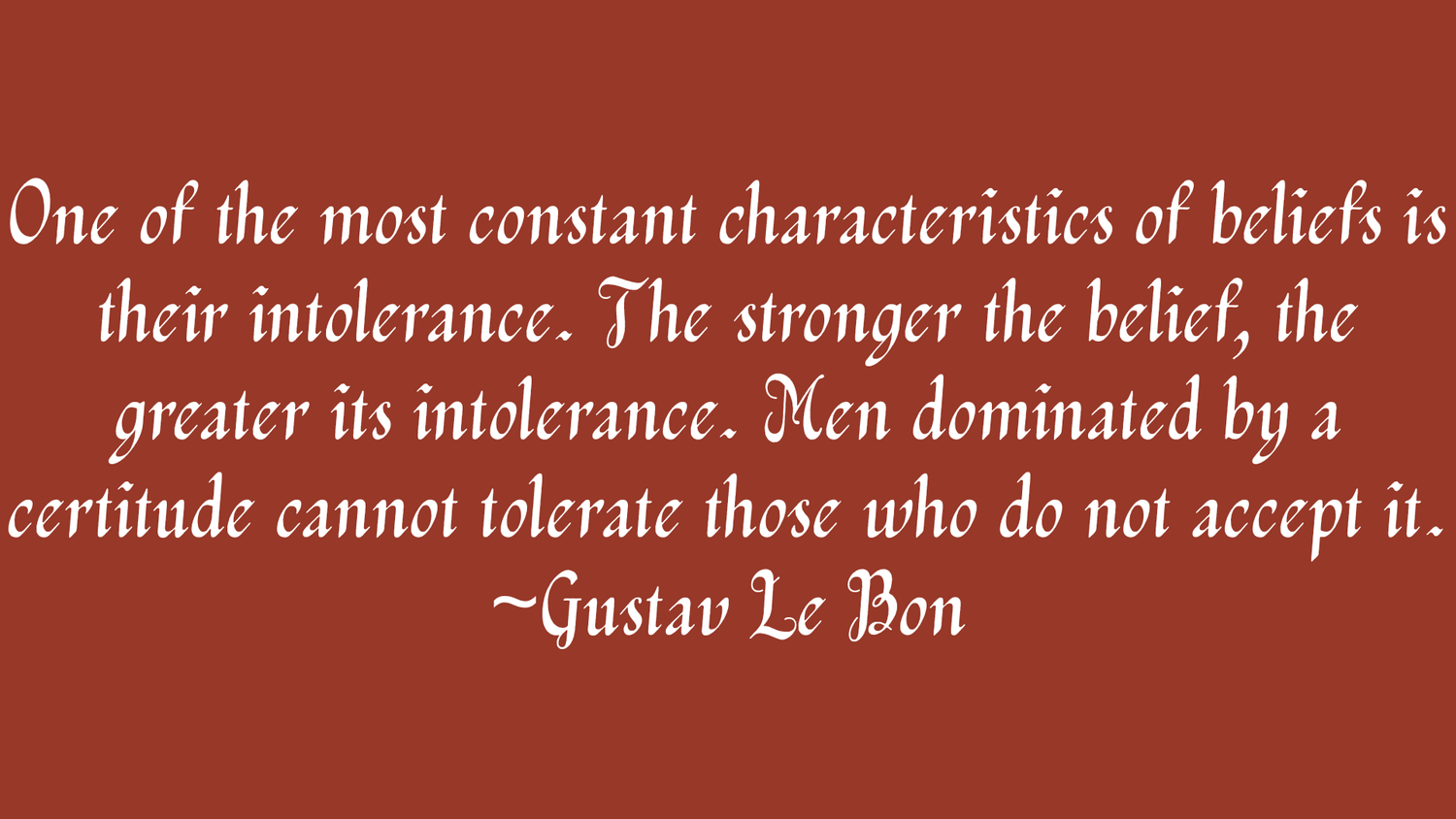
Le Bon argued that crowds relate to their guiding ideas like religious convictions, regardless of the content. This manifests as intolerance toward dissent, submission of one’s will to the cause, fervor, and the need to convert others. Even movements founded on rejecting religion tend to take on a cult-like and dogmatic form once adopted by the crowd.
Crowds, he said, cannot absorb complex ideas in their original, nuanced, or sophisticated form. Any idea intended to spread through a crowd must be radically simplified and stripped of most of its original meaning.
Crowds don't reason by logic but by loosely connected images. They are moved far more by a single dramatic, vivid incident [a disaster, a crime] than by any amount of dry statistical evidence with greater real stakes.
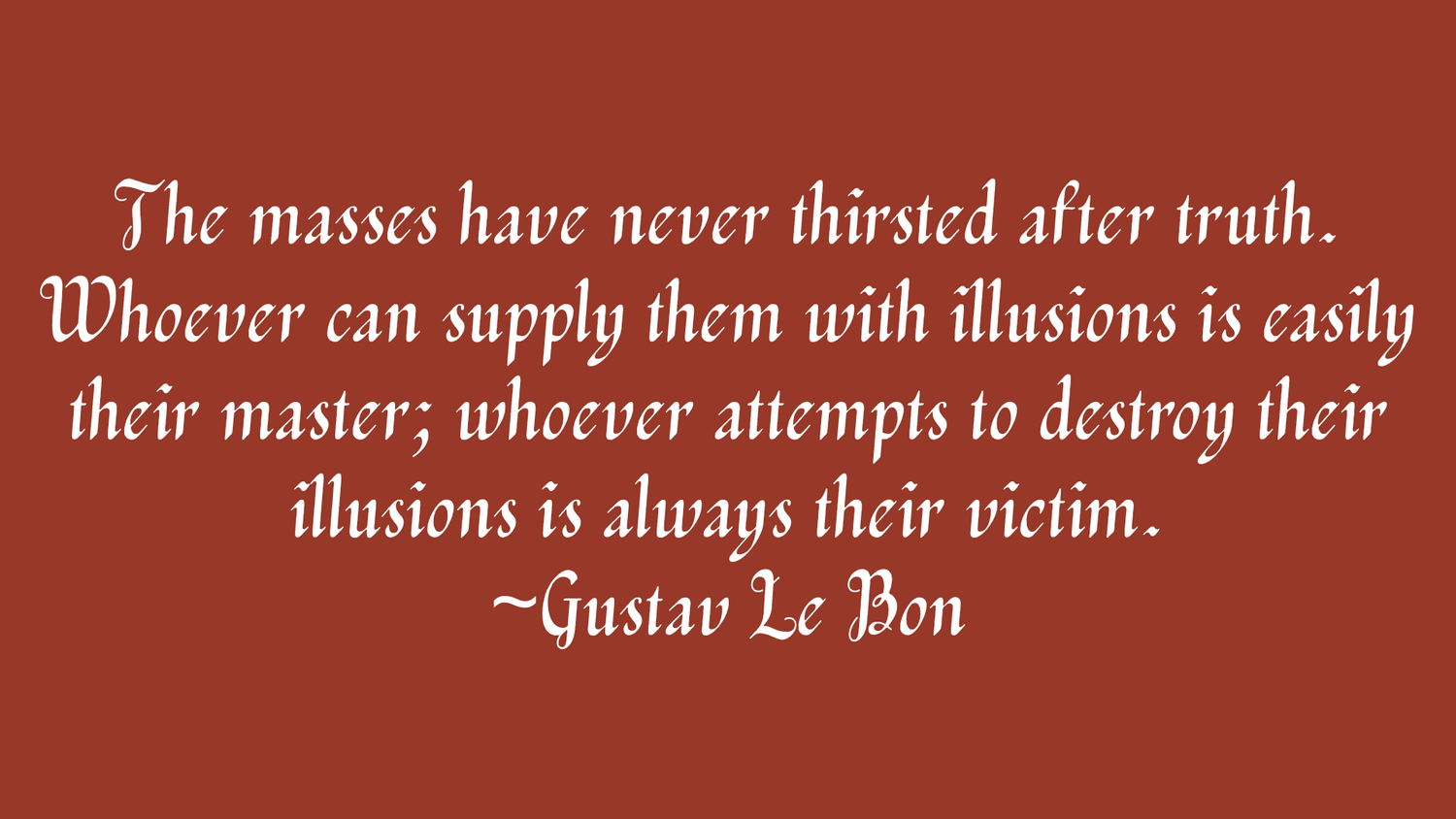
The things that trigger a crowd's opinion in the moment are images, words, formulas, and illusions. Vague emotionally resonant words like liberty or democracy carry power independent of their defined meaning. Illusion is preferable to hard truths.
Pure reason, he argued, has almost no persuasive power over a crowd.
Leaders and Persuasion
Le Bon argued that crowds instinctively need and seek a leader or master. They are, in his words, a servile flock that is incapable of ever doing without a master.
Leaders are typically men of action rather than deep thinkers, often driven by a near fanatical conviction in an idea that has taken hold of them completely.
Their tools of persuasion come down to these:
Affirmation: bold assertion, delivered without evidence or proof.
Repetition: an idea repeated often enough eventually feels like self-evident truth. Le Bon drew an explicit parallel here to the power of commercial advertising.
Contagion: once enough people repeat an affirmation, it spreads through the wider group like a current, until it becomes accepted as fact.
Beyond these, leaders rely on prestige, a kind of magnetic authority that can be acquired [through name, wealth, reputation] or personal [an inherent charisma independent of any external marker].
Conclusion
Le Bon's core psychological claims have proven remarkably durable: that anonymity lowers restraint, that emotion spreads through groups by contagion, that simplification and repetition move people more than argument, and that crowds grant authority to leaders through something closer to fascination than reasoned consent.
Well over a century later, they remain a starting point for anyone trying to understand how individuals think, feel, and act differently the moment they become part of a crowd.
Freud borrowed heavily from The Crowd in his own writing on group psychology. It has been studied by manipulative political figures for its insight into crowd persuasion.
Le Bon wrote this over 130 years ago, watching mobs in the streets of Paris, but it reads less like a history book and more like a field guide to group behavior that never stopped being relevant.
You can download The Crowd in .PDF format here.


Hi, I'm Ellen...
... and I am a writer, educator, and adventurer. I believe that life is the grand odyssey that we make of it.
I would like to help you live a truly magnificent and happy life no matter your age and current situation.
You deserve to experience your hero’s journey to its fullest.
What are you waiting for?
There is only now and the next choice.
Subscribe to my email list here
your privacy is protected and you can unsubscribe any time
Subscribe to the Triumph and Grace newsletter
your privacy is protected - unsubscribe any time