
Triumph
and
Grace
Obesogens
Have you noticed that some people seem to gain weight easily despite their best efforts with diet and lifestyle, while others can eat freely without consequence? The answer might involve hidden chemical culprits called obesogens.
These are chemicals in our everyday environment that can make our bodies store more fat, feel hungrier, and burn fewer calories.
The term obesogen was coined by scientists at the University of California, Irvine, to describe chemicals that interfere with the body’s ability to regulate weight. These substances act as endocrine disruptors, meaning they interfere with hormones that control appetite, metabolism, and fat storage.
Dr. Bruce Blumberg, a developmental biologist at UC Irvine who helped pioneer the field, defines obesogens as chemicals that stimulate the development of fat and reprogram metabolism toward weight gain. In other words, they can make your body more efficient at storing fat and less efficient at burning it.
Obesogens are found in a surprising range of places, and most people have measurable levels of them in their blood. According to research published in Environmental Health Perspectives, over 98% of Americans tested have at least one obesogenic chemical circulating in their system.
Newborns arrive with an average of 200 industrial chemicals already in their systems, detected in umbilical cord blood.
Even at extremely low doses, these chemicals can fundamentally alter how our bodies process energy.
How did this happen? Obesity rates have tripled worldwide since 1975, and our pets are overweight as well. Since then, our environment has changed dramatically with more than 80,000 synthetic chemicals introduced into our air, water, and food – without testing for the impact to metabolism.

For decades, weight management advice focused on calories and activity. While energy balance matters, obesogen research reveals a more complex picture. These chemicals don't just add pounds – they reprogram our metabolism at the cellular level.
Obesogens disrupt multiple biological systems at once. Here are a few of the key ways they affect your body:
Creating More Fat Cells: Many obesogens activate a receptor called PPARγ [peroxisome proliferator-activated receptor gamma], often described as the "master regulator" of fat cell development. When triggered, this receptor instructs stem cells that could become bone or muscle to become fat cells instead. Your body literally builds more storage space for fat.
Blocking Fat Burning: Obesogens can prevent fat cells from releasing their stored fat for energy. Even when you reduce calories or increase exercise, your body may struggle to access these fat reserves, making weight loss feel impossible.
Disrupting Hunger Signals: These chemicals can interfere with your hypothalamus, the brain region controlling appetite. They may increase production of hunger hormones [ghrelin] while suppressing fullness signals [leptin], leaving you feeling hungry even when your body has adequate energy stores. Others increase insulin production, pushing more sugar into fat storage.
Altering Metabolism: Obesogens can interfere with thyroid hormones, reduce the energy your cells produce, slow down your metabolic rate, and even decrease brown fat – the metabolically active tissue that burns calories to generate heat.
Rewire Future Generations: A most alarming discovery from animal studies is that obesogens can affect an individual’s descendants, making multiple future generations prone to obesity from increased fat storage. Researchers believe this happens through epigenetic reprogramming, i.e., chemical tags that switch genes on or off in sperm and egg cells, effectively passing on the metabolic dysfunction. While this sounds concerning, understanding these mechanisms helps us take protective action.
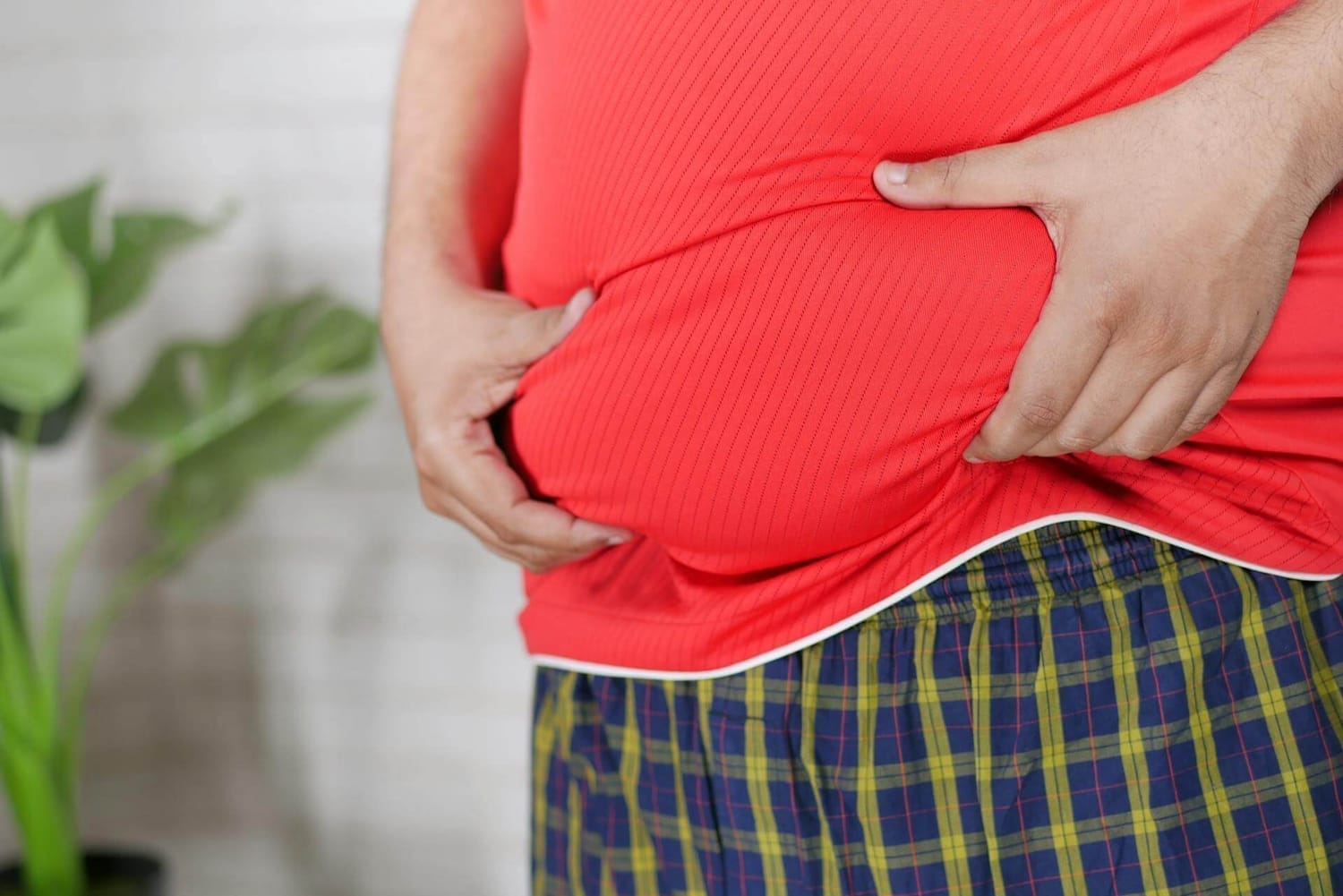
Unfortunately, obesogens are woven into modern life. Here are some of the most common sources:
Your Kitchen:
Non-stick cookware containing PFOA (perfluorinated compounds)
Plastic food containers and water bottles with BPA
Canned foods with BPA-lined interiors
Microwave popcorn bags
Pizza boxes and fast-food packaging
Your Food:
Pesticide residues on conventionally grown produce
Herbicides like atrazine in water supplies
Chemicals in processed and packaged foods
Personal Care Products:
Phthalates in fragranced products, shampoos, and cosmetics
Parabens in preservatives
Compounds in lotions and makeup
Around Your Home:
Flame retardants (PBDEs) in furniture, mattresses, and carpeting
Cleaning products
House dust containing accumulated chemicals
Air pollution from vehicle emissions
Pharmaceuticals:
Certain antidepressants and antihistamines
Some diabetes medications
Atypical antipsychotics
Traditional toxicology assumes the dose makes the poison [more exposure causes more harm, less is safer].
Many obesogens behave like hormones, which function at incredibly tiny concentrations of parts per billion or even trillion. A nanogram [one billionth of a gram] of a chemical can trigger significant biological effects. Studies show that lower doses of BPA sometimes cause more fat accumulation than higher ones, because the body’s hormone receptors are more sensitive to subtle mimicry than to overwhelming signals.
This phenomenon, called a non-monotonic dose response, undermines how safety standards are currently set. Regulators test for high-dose toxicity, then divide by 100 or 1,000 to determine safe exposure limits. If the worst effects happen at the lowest doses, those safe levels may be the most harmful.
While complete avoidance is impossible in the modern world, you can reduce your exposure:
In the Kitchen:
Replace plastic containers with glass or stainless steel
Avoid heating food in plastic containers
Choose fresh foods over canned when possible
Use cast iron, stainless steel, or ceramic cookware instead of non-stick
Filter drinking water with systems that remove PFAS and other contaminants
At the Grocery Store:
Buy organic produce [5-digit PLU code beginning with 9], especially for items on the "Dirty Dozen" list - link in References
Choose products with minimal packaging
Avoid heavily processed foods (those with long ingredient lists and unfamiliar chemicals)
Avoid bottled water stored in plastic for long periods or exposed to heat.
Shop the perimeter of the store where fresh, minimally processed foods are typically located
For Personal Care:
Select fragrance-free products to avoid phthalates
Choose items with shorter, simpler ingredient lists
Look for products labeled paraben-free
Consider making some products yourself with basic ingredients
Around Your Home:
Vacuum frequently with HEPA filters to reduce dust containing accumulated chemicals
Choose furniture and mattresses without flame retardant treatments when possible
Open windows regularly to reduce indoor air pollution
Remove shoes at the door to avoid tracking in chemicals
Special Consideration for Pregnancy: If you're pregnant or planning to become pregnant, reducing obesogen exposure is particularly important, as prenatal exposure appears to have the most significant and long-lasting effects.
Even small changes can make a measurable difference. One study found that children who switched to organic food for just five days had significantly lower pesticide residues in their urine.

Understanding obesogens doesn't mean abandoning all hope for healthy weight management. Diet, exercise, sleep, stress management, and overall lifestyle still matter enormously. But this knowledge helps explain why traditional advice doesn't always work for everyone.
Awareness and personal choices remain our best defense.
Even small changes can make a difference. Your body continuously works to eliminate these chemicals, so reducing new exposures gives your system a chance to clear out accumulated toxins.
Knowledge is power. Mindful choices can free you from the invisible chemical cues that disrupt your endocrine system, and in turn, help protect your health and the health of future generations.

References
The Obesogens: What You Need to Know
Mass Appeal Environmental toxins & weight gain
What Are Obesogens and How Are They Making Us Fat? | Dietitian Explains
What Are Obesogens? How chemicals may affect your weight
Obesogens: How They Are Identified and Molecular Mechanisms Underlying Their Action - PubMed
Obesogens - Lies are Unbekoming
EWG's 2025 Shopper's Guide to Pesticides in Produce | Dirty Dozen

Hi, I'm Ellen...
... and I am a writer, coach, and adventurer. I believe that life is the grand odyssey that we make of it.
I would like to help you live a truly magnificent and happy life no matter your age and current situation.
You deserve to experience your hero’s journey to its fullest.
What are you waiting for?
There is only now and the next choice.
Subscribe to my email list here
your privacy is protected and you can unsubscribe any time
Subscribe to the Triumph and Grace newsletter
your privacy is protected - unsubscribe any time