
Triumph
and
Grace
The Milgram Experiment
In the early 1960s, young psychologist Stanley Milgram set out to answer a chilling question: How far will ordinary people go when instructed by authority to harm someone else?
On the heels of World War II and the genocide in Germany where he had family roots, Milgram wanted to better understand human nature. NAZI war criminal Adolph Eichmann had told the world: I was only following orders. Was German culture unique or is obedience a deeper aspect of human psychology?
Milgram’s famous experiment at Yale University would provide the answer. It began as a simple study on memory and learning and became one of the most shocking revelations about our willingness to abandon our moral compass when faced with perceived authority.
In 1961 Milgram recruited volunteers through newspaper ads, indicating that they would participate in a study about memory and learning. People of all ages and backgrounds responded.
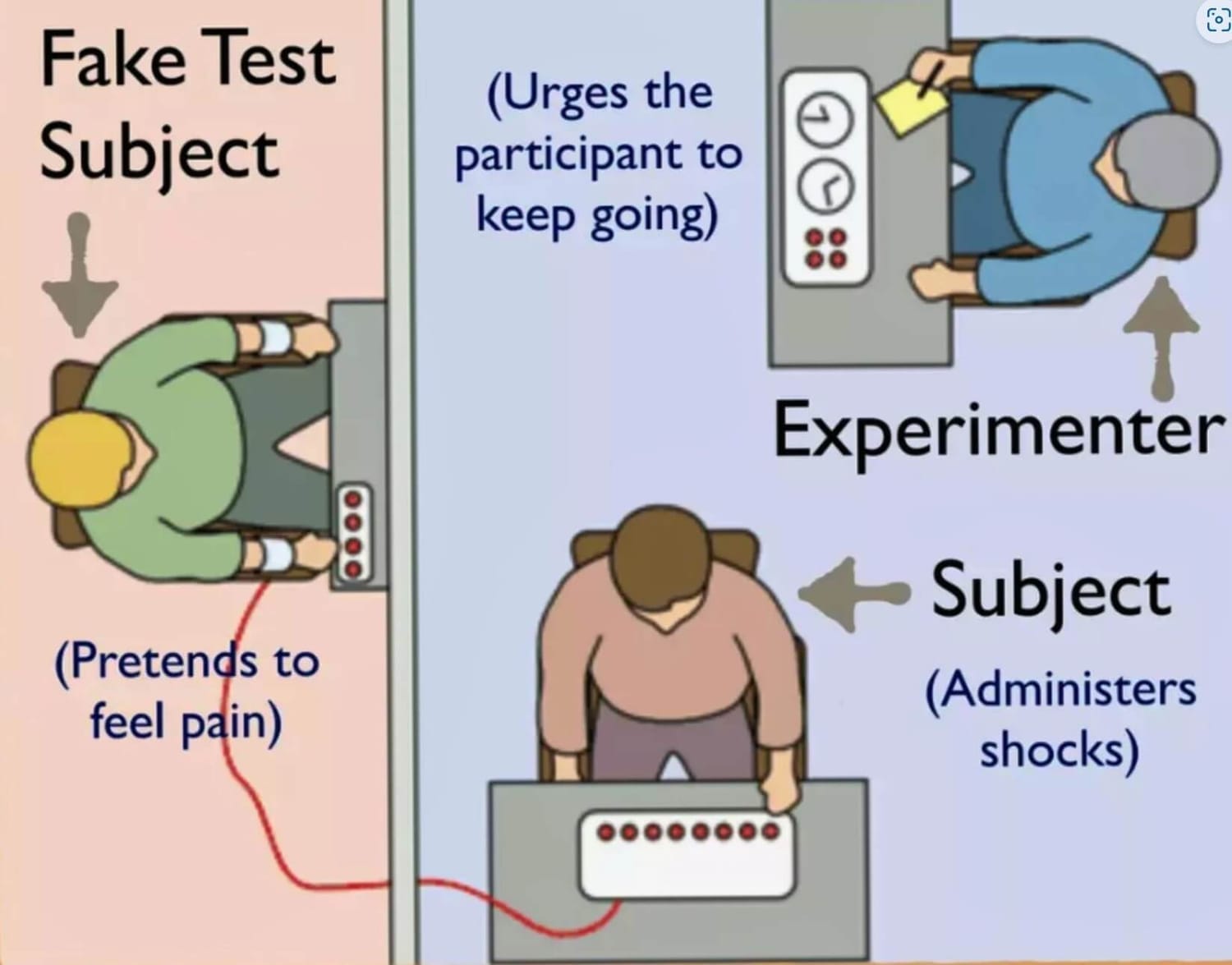
Upon arriving at Yale University, they were introduced to others who were actors in the drama. In fact, the volunteers were the true subjects of the experiment.
Through a rigged drawing, the volunteer was always assigned to the role of teacher and an actor as the learner. The authority figure wore a gray lab coat. The teacher and the overseer were in a separate room where they could hear the learner but not see him.
The instructions were simple. If the learner answered a question incorrectly, the teacher was to administer an electric shock – beginning at 15 volts and increasing in 15-volt increments for further incorrect answers. The machine had a series of switches climbing up to a fatal 450 volts.
Of course, the voltage was not real, and no one was harmed. However, the teacher had no reason to doubt the effect of the jolts when the learner began screaming at voltage 150. At 300 volts, the learner pounded on the wall and then fell silent.
The authority figure told the teacher that silence counted as a wrong answer and told him to continue to administer increased jolts.
If the teacher resisted or hesitated, the lab-coated man used a series of scripted prompts:
Please continue.
The experiment requires that you continue.
It is absolutely essential that you continue.
You have no other choice; you must go on.
Milgram's psychiatrist colleagues predicted that less than 1% of participants would administer the maximum shock. They were devastatingly wrong.
A staggering 65% of participants continued all the way to the lethal level of 450 volts. More remarkably, 100% continued to at least 300 volts, well past the point where the victim had stopped responding altogether.
The results shocked the world. What can we learn from this?
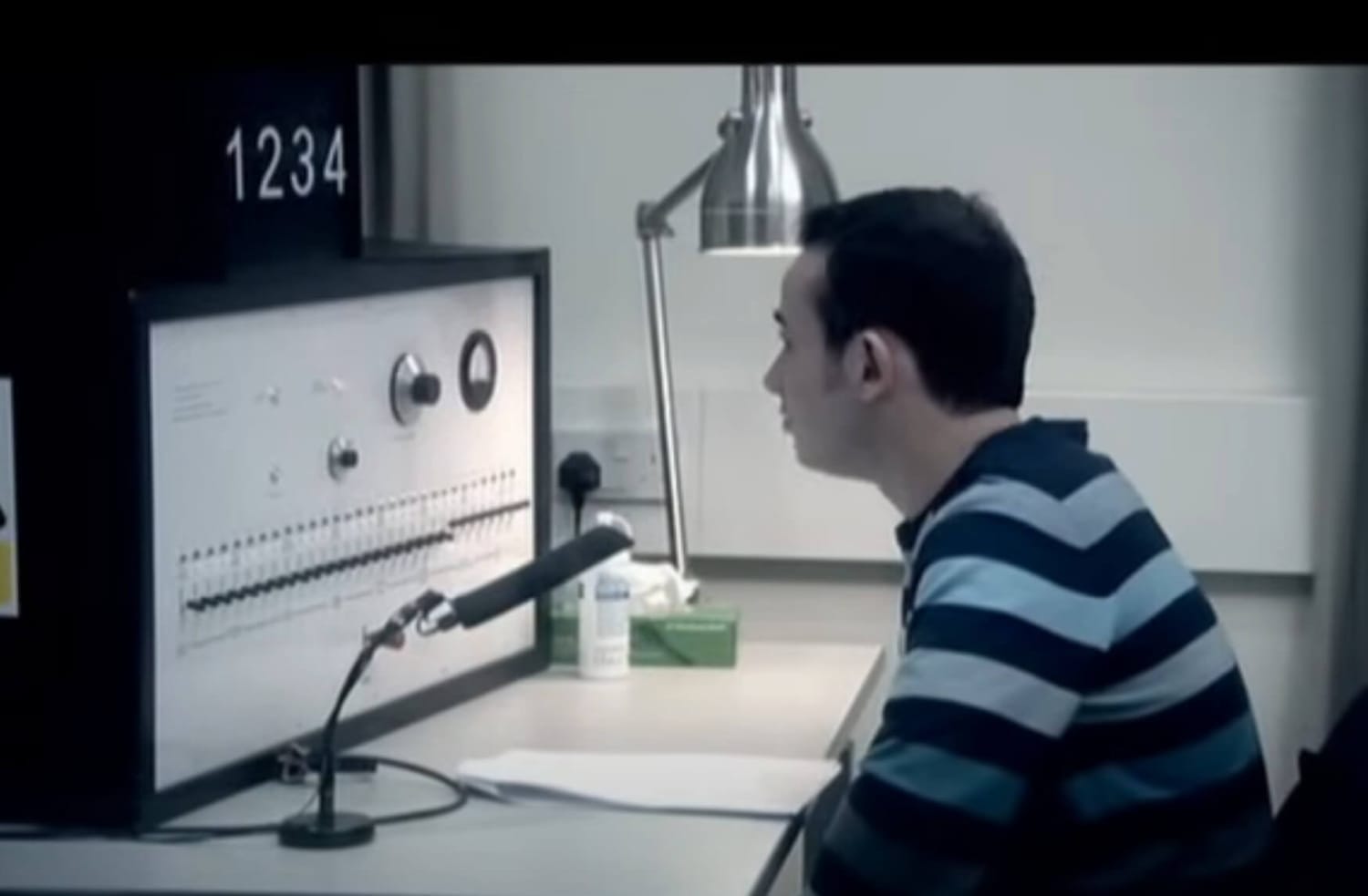
The volunteers were not sadistic individuals. In fact, many showed visible signs of extreme distress. Yet something kept them pressing those switches.
Milgram's interpretation was both simple and chilling: ordinary people, when placed in a structured situation with a perceived legitimate authority figure, will perform acts that violate their deepest moral convictions.
We like to believe that good people do good things and bad people do bad things. Milgram revealed that good people, under certain circumstances, will do terrible things – not because they want to, but because the situation makes disobedience feel impossible in their minds.
Subsequent experiments have demonstrated equivalent results in human behavior.
Milgram proposed that people shift between two psychological states:
Autonomous state: We direct our own actions and take responsibility for the consequences.
Agentic state: We see ourselves as agents carrying out someone else's will, with that authority figure bearing the moral responsibility.
Several factors in Milgram's experiment pushed participants into this agentic state:
Institutional Authority: The Yale University setting lent credibility and legitimacy to the proceedings.
Symbols of Authority: The experimenter's gray lab coat was a uniform that conveyed scientific expertise and moral authority.
Gradual Escalation: The shocks increased incrementally with no clear line of going too far – each step felt like a small extension of what they'd already agreed to do.
Diffusion of Responsibility: The experimenter explicitly took responsibility, allowing participants to feel they weren't personally accountable.
Physical and Emotional Distance: Participants couldn't see the learner's suffering directly, making it easier to continue.
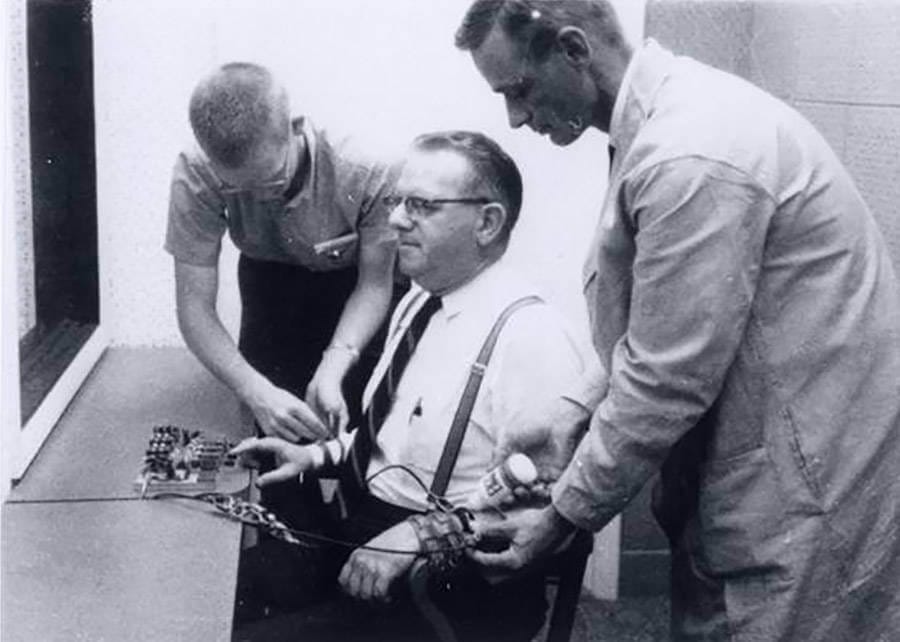
Milgram uncovered not the expected cultural differences in obedience, but something more universal and unsettling. The capacity for ordinary people to commit harmful acts under authority isn't a German problem or a 1940s problem – it is a human problem.
This insight can help us understand historical atrocities. The Holocaust, genocides in Cambodia, Rwanda, and elsewhere were not perpetrated solely by psychopaths, but often by ordinary citizens who found themselves in systems that gradually normalized the unthinkable.
Consider the following examples of compliance and non-critical thinking:
Corporate scandals: From fraudulent accounting at Enron to the Volkswagen emissions cover-up, employees followed orders that conflicted with ethics.
Medical harms: Patients sometimes defer entirely to doctors or health authorities, even when treatments cause harm, forgetting their right to question.
Technology and surveillance: People accept invasive monitoring or censorship when told it’s for safety or efficiency.
Everyday work culture: Many employees stay silent about wrongdoing because the boss said so.
The greatest threat isn’t just that people will follow orders. It’s that systems of authority can subtly condition us to surrender responsibility, inch by inch. Like the gradual voltage increases in Milgram’s experiment, real-world harms often escalate step by step, numbing resistance until it feels too late to turn back.
When we blindly obey, we risk losing the essence of freedom: our ability to act according to conscience. That’s not just political liberty, but something more intimate – our own moral autonomy.

Milgram’s findings reveal the fragility of individual moral agency. In our complex, interconnected world, we're constantly embedded in hierarchical structures – workplaces, institutions, governments – that depend on our obedience to function.
The danger lies in our tendency to surrender critical thinking and personal responsibility too readily, especially when:
Authority appears legitimate and we’re more likely to obey those who seem qualified and properly positioned to give orders
Responsibility is diffused and we become capable of actions we'd never take as autonomous individuals
The process is gradual where small compromises lead to larger ones in an almost imperceptible progression
Dissent is discouraged and framed as disloyalty, weakness, or ignorance
Consequences are abstracted and we don't directly see the results of our actions
While Milgram's overall results were disturbing, we shouldn't overlook a crucial fact: 35% of participants refused to continue to the maximum shock level. The behavior of these individuals offers us hope and practical lessons about resistance. The human spirit is not locked in stone and free thought abides.
What distinguished the 35% who disobeyed from the others? Several factors are involved:
Strong Personal Principles: Those with deeply held moral convictions were more likely to resist, even under pressure.
Previous Experience with Authority: Some participants had personal experiences that made them more skeptical of authority claims.
Social Support: When Milgram introduced confederates who refused to continue, real participants were much more likely to disobey as well (dropping to just 10% obedience).
Proximity and Empathy: Participants who kept the learner's welfare at the center of their attention were more likely to stop.
Questioning the Setup: Those who remained curious and critical about the experiment's purpose were more resistant to pressure.

The extreme willingness of adults to go to almost any lengths on the command of an authority constitutes the chief finding of the study and the fact most urgently demanding explanation. ~ Stanley Milgram
What can we do to shore up our moral compass and take responsibility for our actions?
Cultivate Autonomous Thinking – Maintain your capacity for independent judgment
Identify Your Core Values – Clarify the principles and know your non-negotiables in advance
Practice Small Acts of Resistance – Build your disobedience muscle and question minor rules and expectations in low-stakes situations such as requests for personal information – practice saying no
Seek Diverse Perspectives – Branch out and surround yourself with people who think differently
Stay Connected to Consequences – Make a point to understand and remain emotionally connected to the real-world impact of your decisions and compliance
Question the Legitimacy of Authority – Question if perceived authority is legitimate – does the person possess the expertise – what gives the right to make demands on you
Support Others Who Resist – Ask how you can support others who challenge questionable authority
Maintain Perspective – Beware of artificial urgency and false choices – examine the other options
Freedom isn’t a gift granted by authorities. It’s our innate right.
We protect it through a daily practice of responsibility, conscience, and courage.
The shocking results of Milgram's experiment remind us how easily this freedom can slip away.
The choice is yours.

References
Milgram Shock Experiment | Summary | Results | Ethics
The Dark side of Science: The Milgram Experiment (1963) (Short Documentary)
Milgram experiment | Description, Psychology, Procedure, Findings, Flaws, & Facts | Britannica
The Milgram Experiment: Summary, Conclusion, Ethics
Milgram Experiment (Derren Brown)
"I was just following orders!" Authority Bias explained
Rwanda genocide: 100 days of slaughter - BBC News
Cambodian Genocide Program | MacMillan Center for International and Area Studies at Yale

Hi, I'm Ellen...
... and I am a writer, coach, and adventurer. I believe that life is the grand odyssey that we make of it.
I would like to help you live a truly magnificent and happy life no matter your age and current situation.
You deserve to experience your hero’s journey to its fullest.
What are you waiting for?
There is only now and the next choice.
Subscribe to my email list here
your privacy is protected and you can unsubscribe any time
Subscribe to the Triumph and Grace newsletter
your privacy is protected - unsubscribe any time