
Triumph
and
Grace
Cloth Diapers
Something unexpected is happening in nurseries across the Western world: the humble cloth diaper is making a comeback. While disposable diapers have dominated the market for decades, a growing number of parents are discovering that the old ways might be the better ways for their children, their wallets, and the planet.
The shift in diaper preferences tells a meaningful story about how industrial convenience reshaped childhood development. In the 1950s, when cloth diapers were the norm, American children were typically potty trained by 18 months. Fast forward to today, and that milestone has been pushed to an average of 33 months.
As disposable diapers became more sophisticated and absorbent, they inadvertently created a new problem: children could no longer feel when they were wet. The immediate discomfort that once motivated toddlers to seek alternatives disappeared, replaced by synthetic materials designed to keep them feeling dry even when soaked.
Added to that, there is a growing awareness that even eco-friendly disposables remain in landfills for centuries.
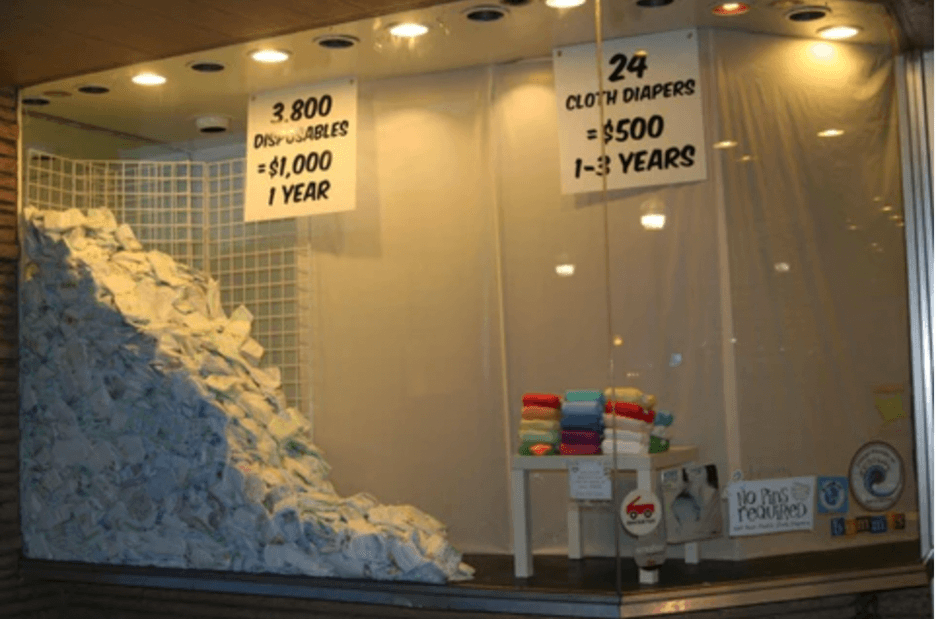
The environmental impact of disposable diapers is staggering. In the United States alone, approximately 22 billion single-use diapers enter landfills each year. These diapers can take 200-500 years to decompose.
With the average child going through roughly 9,000 diaper changes by age three, these contribute to an estimated 3.5 million tons of waste each year.
In addition, the production of disposable diapers requires significant resources: trees for pulp, petroleum for plastics, and large amounts of water and energy for manufacturing.
By contrast, cloth diapers can be reused hundreds of times across multiple children, even though they will require washing and energy for maintenance.
Modern cloth diapers are designed to be more convenient than ever – no more bulky, hard to manage cloth squares and pins. Today’s cloth options are just as easy to use as disposables, with snap closures and breathable materials.
I well remember the days of diaper pails and those giant pins.

The health benefits for children may be even more compelling. Modern disposable diapers contain numerous chemicals, including dioxins from bleaching processes, volatile organic compounds [VOCs], and super-absorbent polymers like sodium polyacrylate. These chemicals have been linked to skin irritation, allergic reactions, and other health concerns.
Cloth diapers, made from natural materials like organic cotton, bamboo, or hemp, allow a baby's skin to breathe. This improved airflow helps prevent diaper rash and promotes healthy skin regeneration. Many parents report that switching to cloth diapers eliminated their children's recurring diaper rash problems entirely.
The breathability factor goes beyond comfort. When babies can feel wetness against their skin, they maintain an important connection to their bodily functions. This natural biofeedback helps them develop awareness of cause and effect – a crucial component of eventual toilet training.
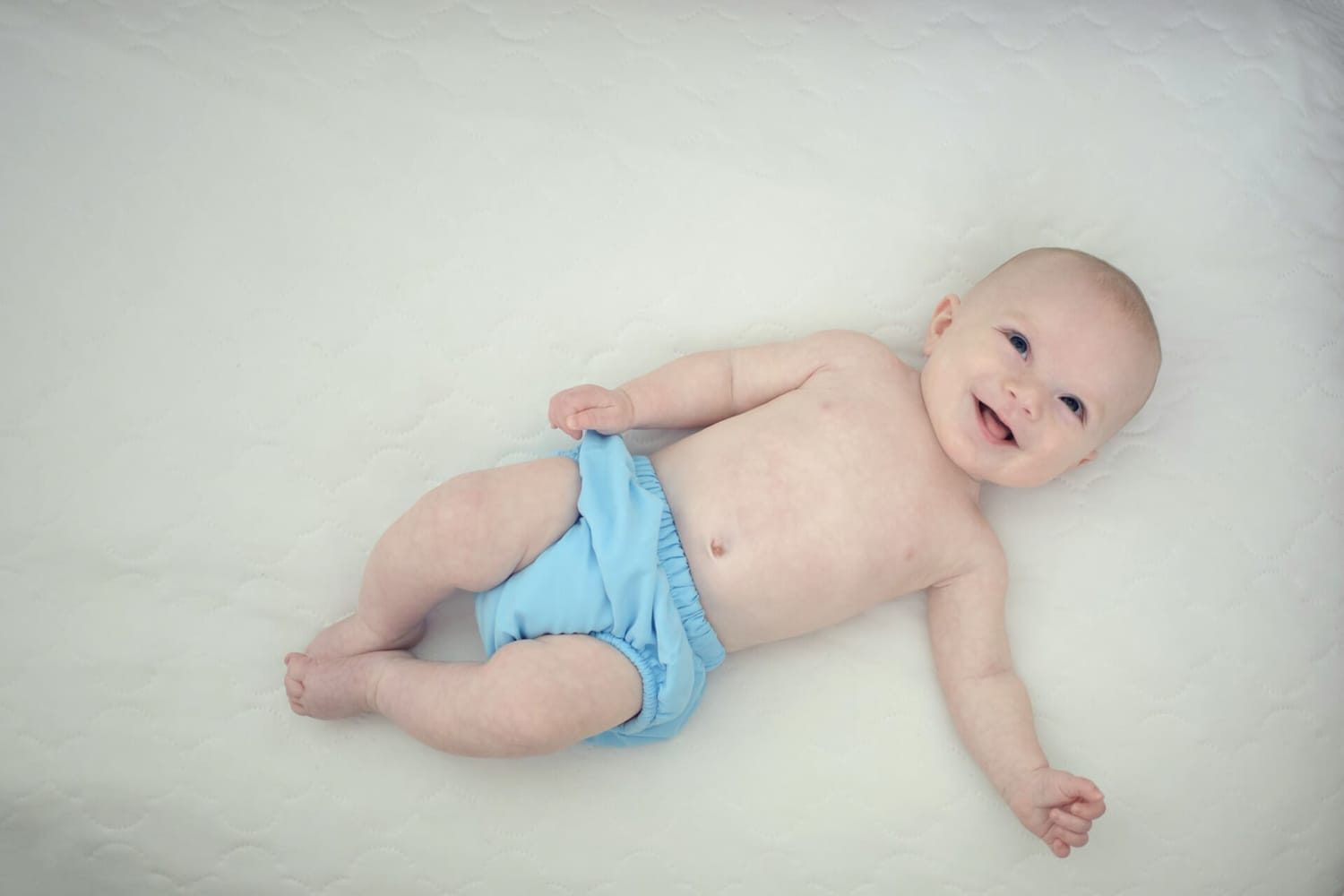
Perhaps the most significant advantage of cloth diapers lies in their impact on toilet training. The research shows a clear correlation: children using cloth diapers typically achieve toilet independence earlier than those in disposables, sometimes as much as six months.
The Azrin & Foxx method, an evidence-developed approach to rapid toilet training, demonstrates remarkable success partly because it emphasizes maintaining children's natural awareness of elimination.
When children can feel wetness, they're more motivated to learn alternatives. The method's creators found that children over 20 months could achieve toilet independence in just four hours, with a 100% success rate in their studies.
In contrast, the ultra-absorbency of disposable diapers can work against toilet training. The diapers keep babies dry and mask one of the most important signals a child can receive: the discomfort of wetness. This reduced tactile feedback makes children unaware of their body’s signals.
Dr. Christine Gross-Loh, author of The Diaper Free Baby, points out that many cultures worldwide never fully diaper their children. Instead, they practice Elimination Communication [EC], responding to babies' natural signals from birth. In these cultures, approximately 50% of children are free of diapers by their first birthday.

While cloth diapers require a higher initial investment, the long-term economics are compelling. Families may spend $2,500 on disposable diapers per child from birth to potty training. A complete cloth diaper system costs around $500-$800 and can be used for multiple children.
Modern cloth diapers feature waterproof outer layers, adjustable sizing, and highly absorbent organic materials. Innovative designs may include bamboo viscose inserts and microfiber cores that rival the absorbency of disposables.
Cloth diaper services can provide clean, sanitized diapers delivered to your door and take away used ones.
For families who wash their own cloth diapers, modern washing machines and improved diaper designs have made the process far simpler than what previous generations experienced.
The resistance to cloth diapers runs deeper than practical concerns. Decades of marketing have convinced many parents that disposable diapers represent progress and that cloth diapers are a step backward.
Remember, the disposable diaper industry pulls in $71 billion each year.

The resurgence of cloth diapers represents more than just an environmental trend – it's a return to child-centered development. When children can feel their bodily functions, they naturally develop awareness and motivation to progress toward independence.
Even part-time use of cloth diapers can help maintain children's bodily awareness while reducing environmental impact and saving money.
Many families find success with hybrid approaches: cloth diapers at home and disposables for outings, or cloth during the day and disposables at night.
For children, the benefits are clear: healthier skin, maintained bodily awareness, and often earlier achievement of toilet independence.
For parents, cloth diapers offer financial savings, environmental responsibility, and the satisfaction of choosing long-term benefits over short-term convenience.
In an age of complex problems, they provide a remarkably simple solution – one that's been hiding in plain sight all along.

References
Toilet Training in Less Than a Day [1976]
The Diaper-Free Baby: The Natural Toilet Training Alternative For A Happier, Healthier Baby
Why Are Modern Kids Potty Training Later? - Fatherhood Journey Network
Why do Americans wait so long to potty train?
Cloth Diapers vs Disposable Diapers: What's the Difference – Born Babies
Cloth Diapers vs. Disposable Diapers: Which Should I Use?
Why Cloth Diapers Are Better for Health
Why Choose Cloth: Cloth Diapers vs Disposable Diapers
Delayed Potty Training: Is it normal? What age is "too late"?
Why Are Today’s Children Toilet Trained Later? – Potty Genius

Hi, I'm Ellen...
... and I am a writer, coach, and adventurer. I believe that life is the grand odyssey that we make of it.
I would like to help you live a truly magnificent and happy life no matter your age and current situation.
You deserve to experience your hero’s journey to its fullest.
What are you waiting for?
There is only now and the next choice.
Subscribe to my email list here
your privacy is protected and you can unsubscribe any time
Subscribe to the Triumph and Grace newsletter
your privacy is protected - unsubscribe any time